

A premium rowing machine can work well at home, but easy storage depends on the space you can dedicate to it. Most rowing machines require at least 8 by 3 feet of floor space, so measure the intended area before choosing a model. A compact footprint and a practical way to put the machine away can make the difference between a regular part of your routine and an obstacle in the room.
It’s reasonable to want one piece of equipment that supports cardio and strength without dominating your home. This guide explains how rowing fits into a balanced workout and how to compare premium rowing machines by resistance, storage, technology, noise, and durability. You’ll also learn which details matter most for your fitness goals and daily routine, helping you choose with confidence.
Key Takeaways
- Match workout style and resistance adjustability to your fitness level and the sessions you want to do.
- Rowing combines cardiovascular effort with work across multiple muscle groups, making technique and pacing important parts of a balanced routine.
- Compare resistance types by their feel and sound, then consider how each machine will fit into your home and storage habits.
- Prioritize durable construction, comfortable contact points, and useful performance tracking when assessing long-term value.
Can I still get a good cardio workout on a rowing machine?
Yes. Commercial rowers provide low-impact workouts that can minimize strain on joints. Common concerns include fatigue, injury from increasing intensity too quickly, and dust on moving surfaces. If you row daily, build effort gradually, watch for fatigue or injury, and follow the machine’s maintenance guidance.
Home Rowing Benefits
A home rower lets you fit workouts around your schedule without travelling to a gym or waiting for equipment. A compact magnetic model may suit a shared room where quiet operation matters, while a WaterRower may appeal if you prefer the fluid feel of water resistance. Before choosing, consider where you’ll row, how you’ll store the machine, and whether its sound suits your household.
Workout Benefits and Routines
Rowing combines cardiovascular effort with a full-body workout, engaging the legs, trunk, back, and arms through each stroke. For endurance, keep a steady pace and focus on controlled movement. For intervals, alternate stronger efforts with easier rowing. Beginners can start at a manageable intensity, then gradually increase effort as technique and comfort improve.
Coaching access can influence how consistently you follow a plan. With a WaterRower, consider whether you prefer self-directed sessions or interactive programming with guided instruction and performance feedback. Compare the specific setup and features of the machine you’re considering rather than assuming every rower includes the same coaching tools. Choose guidance that supports your goals, from steady endurance work to varied intervals.
What muscles does a rowing machine work?
Rowing works more than the arms. Commercial rowing machines engage 85% of the body’s muscles with every stroke, including the legs, glutes, back, shoulders, arms, and trunk. The legs drive the movement first; the torso follows, then the arms draw the handle toward the body. Reversing that sequence on the return helps keep each stroke controlled.
The muscles you emphasize depend on technique, resistance, and pace. A forceful leg drive works the lower body, while a steady torso and relaxed grip help coordinate the pull. When building a home gym, choose a rowing experience that lets you maintain comfortable posture and move smoothly through the full stroke, rather than chasing resistance that disrupts your form.
Machine prices vary by construction, resistance system, console features, and included programming. Compare the total ownership cost, not just the purchase price. If an interactive program requires a subscription, factor in that recurring charge separately. When comparing hydraulic, magnetic, and water rowers, assess each design’s feel and features before comparing like with like.
Hydraulic rowers use piston-based resistance, while magnetic models offer smooth, quiet, adjustable effort. Water rowers use fluid resistance for a natural-feeling stroke and a distinctive sound. These differences can affect workout comfort and how well the equipment fits in a shared home. Choose the resistance style that suits your training and household, then weigh construction, tracking tools, and ongoing program costs. This gives you a clearer basis for comparing models without assuming one category is automatically better value.
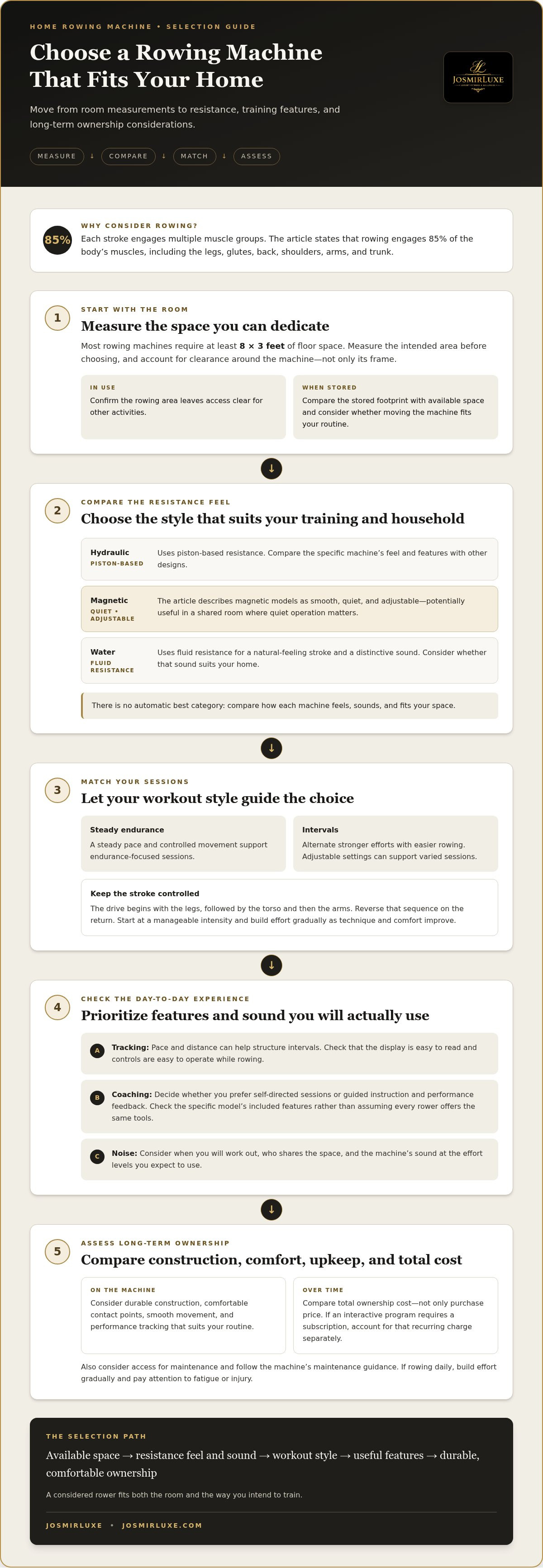
Choosing a rowing machine based on fitness goals, feel, space, technology, noise, and durability
Choose a rower based on your training priorities and the room where you’ll use it. A premium rowing machine should suit your preferred effort, daily routine, and home setup.
Rowing Feel
Resistance affects how effort builds through each stroke, so consider how the machine responds when you change pace. If you plan to alternate cardio intervals with strength-focused work, adjustable settings can support varied sessions. A premium rowing machine should feel controlled during both easier and more demanding efforts, allowing you to focus on technique rather than adjust to uncomfortable motion.
Space Requirements
Measure the area where you plan to row, including clearance around the machine, not just its frame. If it will share a room, consider where it can be stored and whether moving it fits your routine. Compare its stored footprint with the available space, and make sure access remains clear for other activities.
Technology Features
Look for tracking and programming that match the way you train. A display showing pace and distance, for example, can help structure intervals, while guided workouts may suit someone who prefers a defined session. Choose features you’ll use consistently, and check that the controls are easy to read and operate while rowing.
Noise Levels
Think about when and where you’ll work out. A rower in a shared living space may need to suit quiet mornings or nearby work calls, while a dedicated gym allows more flexibility. Assess the machine’s sound at the effort levels you expect to use, and consider durable construction and access for maintenance as part of long-term ownership.
JOSMIRLUXE: Luxury Treadmills
JOSMIRLUXE offers Premium Rowing and Cardio Equipment for home training spaces focused on cardio and rowing. Explore this range alongside Functional Trainers and Strength Equipment or Smart Home Gym Systems to find equipment that suits your goals and available room.
If your routine would benefit from a dedicated cardio option beyond rowing, Luxury Treadmills offer another category to explore. Choose equipment according to the workouts you intend to do and the space you can dedicate to training, then explore JOSMIRLUXE’s fitness equipment as you consider your setup.
Shape a Training Space You’ll Return To
Consider how rowing will fit into your everyday routine, not just where the equipment will stand. Think about the room, your preferred training style, and whether the setup makes it easy to begin a workout. A premium rowing machine can be a considered investment in a home environment designed around consistent movement and personal goals.
As your plans take shape, explore equipment that complements the way you want to train, from cardio to strength work. JosmirLuxe offers Luxury Treadmills, Functional Trainers and Strength Equipment, and Smart Home Gym Systems for a broader home fitness setup. Explore JosmirLuxe fitness equipment as you consider a space that feels suited to you.
Frequently Asked Questions
Is it easy to store a rowing machine at home?
Storage depends on the machine’s design and your available space. Before choosing, measure its footprint both in use and in its storage position, then consider how you’ll move it between the two. For example, a rower kept in a shared room should be easy to relocate without blocking doors or disrupting other activities.
Can rowing machines help with weight loss?
A rowing machine can support exercise as part of a weight-management routine, but using one doesn’t guarantee weight loss. It’s a training tool, not a predictor of results. If weight management is your goal, consider whether rowing fits a broader routine you can sustain, and focus on consistent participation rather than expecting a particular outcome.
Final Thoughts: Which Rowing Machine is Right for You?
Choose a machine that suits your home and the training you’ll realistically do. Before deciding, note your main goal, where the rower will go, and which features matter to you. A display or guided program can support a structured routine, while a straightforward setup may suit someone who prefers to train independently.
Is a rowing machine safe for people with joint issues?
Rowing provides a low-impact workout that can minimize strain on joints, but comfort varies with technique and individual needs. Begin with controlled movement and manageable effort instead of forcing a deep reach or powerful pull. Increase intensity gradually, watch for fatigue or signs of injury, and stop if rowing causes pain.
What types of rowing machine resistance are available?
Common resistance types include magnetic, air, water, and hydraulic systems. Magnetic models allow adjustable resistance and operate quietly; air resistance builds with each stroke. Water systems create fluid movement and an audible water sound, while hydraulic models use pistons. Compare how each system responds to effort, along with the feel and sound you prefer at home.