

The chamber count shapes how an intermittent pneumatic compression system is arranged, but it doesn’t determine which option is right for everyone. A pneumatic compression device uses air-filled cuffs that inflate and deflate around the legs. Some sleeves cycle every 20 to 60 seconds, depending on the system.
Chamber count is an easy place to start when comparing a pneumatic compression device, but it is not the only factor. Consider the device’s intended use, garment coverage, and the clinical guidance for the person who will use it.
This article explains how intermittent compression relates to lymphedema and post-thrombotic syndrome, and what four-, six-, and eight-chamber designs mean. You’ll learn what to compare and why medical context matters when choosing compression for recovery or home wellness.
Key Takeaways
- Understand how intermittent air pressure is used in clinical settings and why its purpose matters when considering compression.
- See how lymphedema and post-thrombotic syndrome relate to compression therapy, including the role of Medicare coverage criteria.
- Compare four-, six-, and eight-chamber arrangements by how they divide the garment and shape the compression sequence.
- Explore how JosmirLuxe’s recovery and compression technology and red-light therapy devices fit into a broader home wellness environment.
Lymphedema and post-thrombotic syndrome
Lymphedema causes persistent swelling, while post-thrombotic syndrome can develop after deep vein thrombosis. Before recommending compression, a physician considers symptoms, affected areas, and treatment history.
Sequential Lymphedema Pumps
A sequential pump inflates garment chambers in order, applying pressure along the limb. Because lymphedema can affect different areas, garment coverage and fit should match the prescribed treatment plan. A lower-leg garment, for instance, covers a different area from one that extends farther up the limb. Clinical assessment helps guide the choice.
IPC Use for Lymphedema
Intermittent pneumatic compression uses timed pressure from an inflatable garment as part of lymphedema care. A physician determines whether it suits the person’s condition and how it fits with conservative treatment. For Medicare home coverage, the patient must complete a 4-week trial of conservative therapy without significant improvement or with significant symptoms remaining. This makes treatment history relevant to coverage.
Medicare covers pneumatic compression devices under the DME benefit subject to National Coverage Determination 280.6, according to the Centers for Medicare & Medicaid Services.
How much does a pneumatic compression device cost in the United States? There is no single cost for every setup: configuration and insurance coverage can affect what a person pays. Medicare coverage is subject to the criteria above.
What are intermittent pneumatic compression devices?
An intermittent pneumatic compression system uses an electric pump and inflatable sleeves to apply and release pressure in cycles. It may be included in a care plan when limited movement raises concern about blood clots.
Blood Clot Prevention
Deep vein thrombosis is a clot in a deep vein, often in the thigh or lower leg. If a clot travels to the lungs, it can cause a pulmonary embolism. Intermittent sleeves inflate and deflate around the legs to support blood flow while movement is limited, such as after surgery or during a hospital stay.
More than 900,000 people in the United States develop venous thromboembolism each year. As many as 70% of healthcare-associated cases may be preventable. IPC is one possible measure in prevention plans, alongside other care selected for the patient.
How IPC Supports VTE Prevention
Sequential compression applies pressure through garment chambers in a timed pattern, then releases it before the next cycle. The repeated action supports blood movement through leg veins when walking is limited. Sleeves may cycle every 20 to 60 seconds, depending on the system. A large trial found IPC decreased deep vein thrombosis risk by 4%.
Venous thromboembolism includes deep vein thrombosis and pulmonary embolism. When considering compression as part of a hospital prevention plan, a provider weighs the person’s mobility and clinical circumstances.
For safe use, follow your provider’s instructions for fit and operation. Cuffs should feel snug, not painful. Contact a healthcare provider promptly if you notice leg swelling, warmth, pain, or a sore beneath a cuff. Remove sleeves to shower, then put them back on as soon as possible.
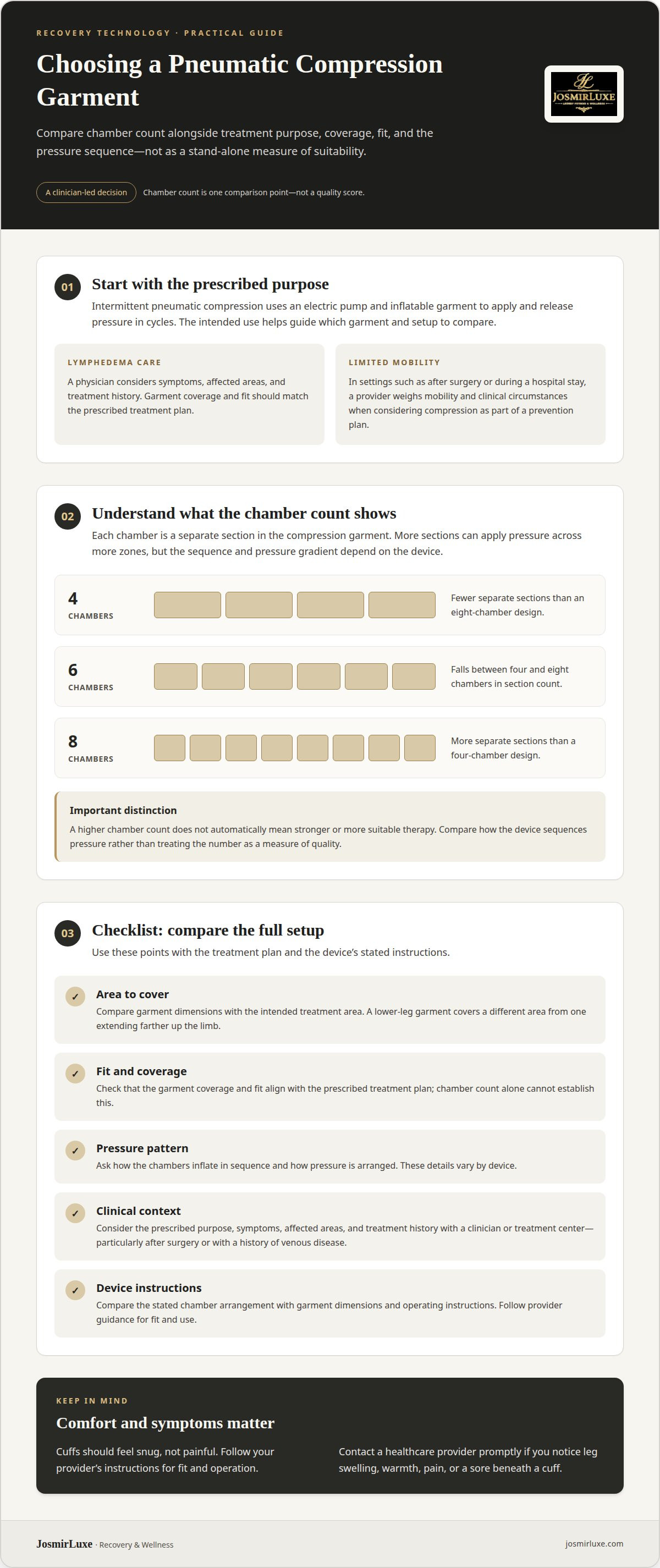
Pneumatic compression devices with 4, 6, or 8 chambers
Chamber count refers to the number of separate sections in a compression garment. Four-, six-, and eight-chamber designs can distribute pressure differently along a limb. The number alone does not determine whether a device is suitable for a patient or condition.
A four-chamber garment divides treatment into fewer sections than an eight-chamber design, while six chambers fall between them. More segments can apply pressure across more zones, but the sequence and gradient depend on the device. Extra chambers do not automatically mean stronger or more suitable therapy.
Intermittent pneumatic compression supports venous circulation through repeated pressure and release. Chamber count is only one consideration: garment coverage and fit matter too. A lower-leg sleeve and a garment extending farther up the limb cover different areas, so compare them against the intended treatment area.
How do you choose the right device and garment? Start with the prescribed purpose, the area to cover, garment fit, and the treatment pattern recommended for you. A clinician or treatment center can help interpret these factors, particularly after surgery or with a history of venous disease. Discuss any history of pulmonary embolism with your care team as well.
Compare the stated chamber arrangement with the garment dimensions and instructions. Ask how the pressure sequence works instead of relying on chamber count alone. These details show how a configuration may fit everyday use, without treating a higher number as a measure of quality.
JOSMIRLUXE: Red-Light Therapy Devices
JOSMIRLUXE offers red-light therapy devices and recovery and compression technology for people creating a considered home wellness environment. These are distinct categories: red-light devices do not replace prescribed compression or medical care for lymphedema, deep vein thrombosis, or post-thrombotic syndrome.
If a clinician has recommended a pneumatic compression device, follow their guidance on the equipment and treatment routine. Red-light therapy may be considered for personal wellness, while vascular or lymphatic concerns call for guidance from a healthcare professional. JOSMIRLUXE also offers luxury massage chairs for a recovery-focused space, but they do not replace clinical care.
Contact JOSMIRLUXE to discuss wellness equipment that fits your home and goals.
Shape a recovery space around your next step
Choose equipment based on its role in your routine, and keep prescribed compression care separate from general wellness. A pneumatic compression device used for a medical condition should be selected and used according to clinical guidance; a home setup can support other personal fitness and recovery goals.
For a broader training environment, JosmirLuxe offers luxury treadmills, functional trainers and strength equipment, and smart home gym systems. These options serve different goals, from cardio to strength training, and can be considered alongside recovery technology when planning a dedicated space.
Explore JosmirLuxe’s wellness equipment and take a thoughtful next step toward a home environment that reflects your goals.
Frequently Asked Questions
What happens if the device isn’t inflating?
Before troubleshooting, pause use and consult the manufacturer’s instructions. Check that the power source is connected and the tubing is secure, with no visible kinks. If the problem continues, do not open or repair the pump yourself. Contact the equipment provider or your healthcare team, especially if the system was prescribed and you are unsure what to do about a missed session.
Will I need other treatments to prevent blood clots?
Possibly. A prevention plan may include movement, medication, or other measures based on your health and care setting. After surgery, getting up and moving as soon as possible can help reduce clot risk when appropriate. Ask your care team which measures apply and what to do if your mobility changes or a planned treatment is interrupted.
What is a pneumatic compression device and how does it work?
It is a pump connected to an inflatable garment, usually worn on a limb. First establish whether your prescription is for hospital prevention or home care, since the setting and instructions differ. Keep the equipment guide and treatment plan accessible, and follow the prescribed schedule rather than changing it based on how the garment feels.
What conditions are pneumatic compression devices used to treat?
Use depends on the clinical purpose. Some systems are prescribed for lymphedema management; others are used in plans to reduce clot risk in specific settings. If your diagnosis or treatment goal changes, do not assume the same equipment is still appropriate. Tell the clinician overseeing your care about changes in symptoms, mobility, or care setting.
What types of pneumatic compression devices are available?
Systems differ in their intended setting, garment design, and pump operation. Some are used in hospitals during periods of limited mobility; others may be prescribed for home use. Compare how the prescribed system fits your treatment plan and daily routine rather than choosing by a feature label alone.