

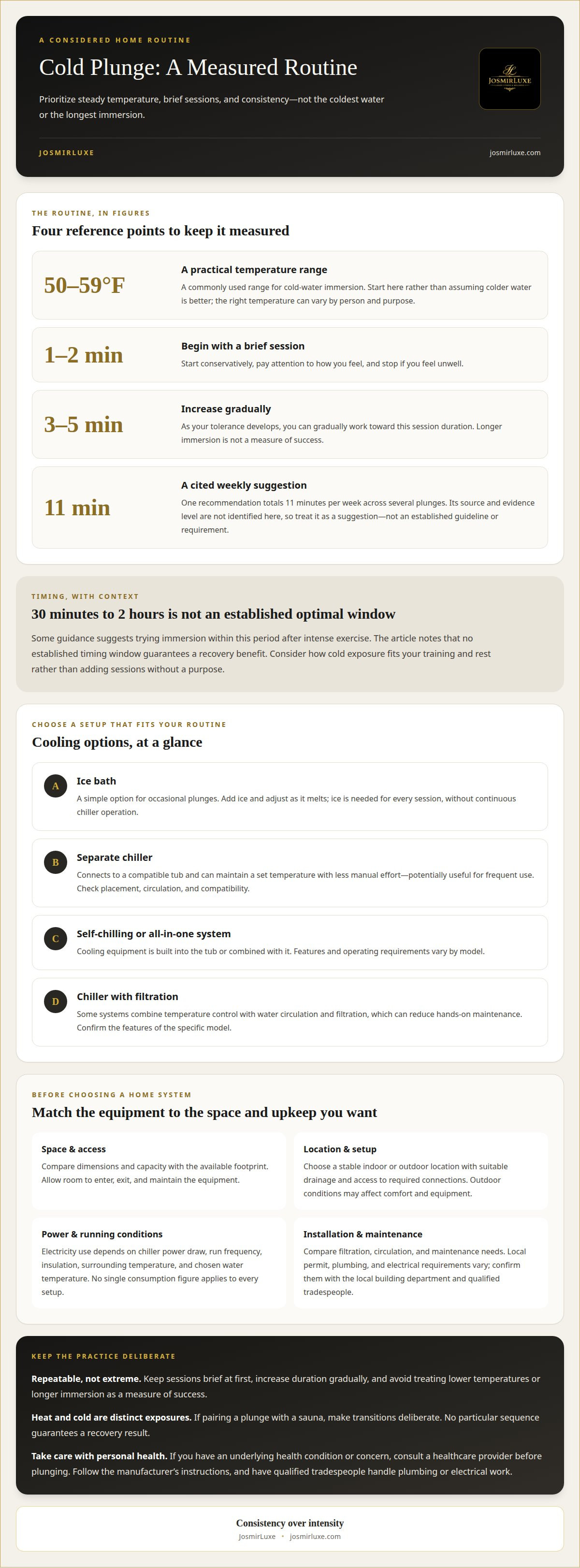
The most useful cold plunge routine starts with a considered temperature, not simply the coldest water you can tolerate. A home cold plunge system can be set to 50-59°F as a practical starting point for choosing your setup, but this range is not a universal target for recovery or wellness.
Start by considering the water temperature: it shapes the plunge, while consistent control can make a regular routine easier to manage. The right home cold plunge system should also suit your available space, preferred level of maintenance, and expected frequency of use.
This guide explains how temperature control, chilling and filtration features, and a gradual approach to plunge sessions fit together. You’ll learn what to compare when choosing a home setup that feels manageable in everyday life.
Key Takeaways
- If following a 50-59°F recovery and wellness recommendation, do not assume colder water is better.
- Choose between adding ice and using a chiller based on how often you plan to plunge and how consistently you want to control the water temperature.
- Compare system dimensions, capacity, filtration, and maintenance needs with the space and routine you have in mind.
- Start with brief sessions and increase duration gradually as you become more comfortable with the cold.
How cold should the water be for an effective plunge?
A commonly used temperature range for cold-water immersion is 50-59°F, though the ideal temperature can vary by person and purpose. Start within that range rather than assuming colder water makes a session more effective. In a home cold plunge system, steady temperature control helps make sessions more consistent and easier to plan.
For occasional plunges, an ice bath is simple: add ice and adjust as it melts. A chiller maintains a set temperature with less manual effort, which can suit frequent use. Some systems combine a chiller and filtration, pairing temperature control with water circulation and less hands-on maintenance. A self-chilling tub has cooling equipment built in, while an external chiller connects separately to a compatible tub.
A bathtub chiller can adapt a home tub for cold immersion when its connections and circulation setup are compatible. Before choosing this approach, consider equipment placement, water circulation, and filtration. When used alongside saunas, treat heat and cold as distinct parts of the routine. Some research suggests cold-water immersion after exercise may reduce perceived muscle soreness, but evidence on the effects can vary. There is no established 30-minute-to-two-hour window that guarantees this benefit.
In the United States, permit, plumbing, and electrical requirements depend on local rules and the installation. Before work begins, confirm applicable requirements with the local building department and qualified tradespeople. If you have an underlying health condition or concern, consult a healthcare provider before plunging.
For an indoor or outdoor installation, choose a stable location with suitable drainage and access to the required connections. Have qualified tradespeople handle plumbing or electrical work, and follow the manufacturer’s instructions before filling and operating the tub.
Home cold plunge models and product features
Your choice of model affects the space, upkeep, and consistency of your immersion routine. Compare the tub, cooling method, filtration, and operating requirements to find a setup that suits your home.
Model Features and Product Choices
Home models range from simple tubs filled with ice to self-chilling units with integrated cooling. A separate chiller can connect to a compatible tub, while an all-in-one design combines the tub and cooling equipment. Filtration and water circulation can reduce routine maintenance, but features vary by model. For an outdoor setup, consider the available footprint and how the unit will be protected from local conditions.
Compare the tub’s capacity and dimensions with your available space, including room to get in and out and maintain the equipment. Precise temperature settings can make regular sessions more predictable. Choose a premium cold plunge for how you’ll use it, not just how it looks.
Electricity Use
Electricity use depends on the chiller’s power draw, how often it runs, insulation, surrounding temperature, and your chosen water temperature. A unit maintaining colder water outdoors in warm conditions may operate differently from one in a temperature-controlled room. Ice tubs avoid continuous chiller operation but require ice for every session. For a home cold plunge system, compare the manufacturer’s energy information with your intended routine; no single consumption figure applies to every setup.
Reviews can provide useful details about setup, temperature consistency, filtration, and maintenance. Look for specific, recurring observations rather than broad praise or criticism. Price also reflects factors such as cooling configuration, tub size, materials, and included features. Weigh these against upkeep and everyday convenience to assess value, rather than choosing on purchase price alone. A well-matched system may be easier to incorporate into a personal recovery routine, without adding unnecessary complexity.
Home cold-plunge wellness routines
A sustainable routine is built around measured exposure, consistent timing, and a clear purpose. Begin with 1-2 minutes, then increase gradually toward 3-5 minutes as your tolerance develops. Keep the water within the 50-59°F range discussed above, and avoid treating a lower temperature or longer immersion as a measure of success. The useful takeaway is simple: make the session repeatable, not extreme.
One cited recommendation totals 11 minutes of cold-water immersion per week, divided across several plunges. The source and evidence level for this recommendation are not identified here, so treat it as a suggested approach rather than an established guideline or a requirement for every person. Some guidance suggests trying immersion within 30 minutes to two hours after intense exercise, but this timing should not be taken as an established optimal window. Consider how cold exposure fits your training, rest, and muscle recovery rather than adding sessions without a purpose.
Plan the setting around your actual routine. A portable tub may suit a flexible space, while a dedicated installation can make regular use easier. Outdoors, changing weather can affect comfort and equipment conditions. Keep the area accessible, and make sure the electrical outlet and setup follow the unit’s instructions. Don’t let a seasonal promotion, including Black Friday, dictate where or how you use the system.
Contrast therapy pairs cold immersion with heat, such as time in a sauna. Treat each as a distinct exposure, and make transitions deliberate rather than rushing between temperatures. Choose a sequence that feels manageable and supports your broader wellness routine; no particular order guarantees a recovery result.
If you have an underlying health condition or concern, consult a healthcare provider before plunging. Start conservatively, pay attention to how you feel, and stop if you feel unwell. A measured routine, repeated thoughtfully, is more useful than chasing the coldest possible temperature.
JOSMIRLUXE: Cold Plunge and Hydrotherapy Systems
JOSMIRLUXE offers Cold Plunge and Hydrotherapy Systems for people creating a considered recovery space at home. Once you’ve weighed temperature control, installation needs, and the routine you can sustain, choose a setup suited to your space and intended use. A cold plunge can also complement a broader home fitness environment, with equipment selected around your priorities.
Whether you’re refining a dedicated wellness area or planning a versatile training space, focus on features that matter in daily use. JOSMIRLUXE also offers Smart Home Gym Systems, Functional Trainers and Strength Equipment, and Luxury Treadmills.
Contact JOSMIRLUXE to discuss your home wellness setup.
Make Your Wellness Space Work for You
Picture how a cold plunge would fit into your home and daily routine. Consider who will use it, where it will go, and whether its upkeep feels practical alongside your existing habits. These questions can help you distinguish a considered investment from equipment that rarely gets used.
A home cold plunge system is most compelling when its role in your wellness space is clear. Consider how recovery fits alongside training, rest, and other habits you want to sustain. A setup that complements your lifestyle can make the space feel intentional, rather than built around a single feature.
For a thoughtful next step, contact JosmirLuxe about home cold plunges and explore the possibilities for your home. A well-chosen environment can support a more deliberate approach to everyday wellness.
Frequently Asked Questions
Do I need a chiller or can I just use ice?
Ice works for occasional plunges; a chiller is convenient when you want repeatable temperature control. Consider how often you’ll use the tub, how you’ll source and add ice, and whether that preparation suits your routine. A chiller adds equipment and power needs, while ice requires preparation before each session. Choose the approach that feels practical to maintain.
How cold should I make my ice bath?
A range sometimes suggested in wellness guidance for recovery and wellness is 50-59°F, though evidence does not establish it as a universal target. Use a thermometer to check the water rather than estimating by touch, and avoid chasing the coldest possible setting. If the water feels overwhelming, leave the bath and reassess your approach before another session. The goal is a measured experience, not a test of endurance.
How should I breathe in an ice bath?
Breathe steadily and naturally as you enter, rather than forcing deep breaths or holding your breath. Keep a calm, comfortable rhythm and your head above water. If you feel dizzy, unusually short of breath, or unwell, exit the bath. Avoid rapid breathing techniques in the water, since they can make it harder to respond calmly.
Is an Ice Bath Worth It?
An ice bath may be worthwhile if cold immersion suits your personal wellness routine and you’re comfortable maintaining the setup. Its value depends on what you want from the experience, how consistently you’ll use it, and the time needed for preparation and care. It isn’t essential for everyone, and it shouldn’t replace rest or other recovery habits that work for you.
Is it safe to use every day?
Daily plunging isn’t automatically right for everyone. Pay attention to how your body responds, keep sessions controlled, and stop if you feel unwell. If you have an underlying health condition or concerns about cold exposure, consult a healthcare provider before using an ice bath. Let your wellbeing guide your routine, not pressure to plunge every day.