

A home gym can suit people who want strength training to fit more naturally into their routines, especially when they have space for equipment and a clear training goal. High end home strength equipment ranges from a focused strength machine to an all-in-one system, so the right choice depends on how you train and the room available. Most home gym systems need an area of at least 8 feet by 8 feet for the unit and clearance, though requirements vary by model.
It’s understandable to want equipment that feels substantial and capable without overwhelming your home. This guide explains how to compare strength machines, functional trainers, and all-in-one gyms, and how to weigh training needs, space, and practical setup considerations. You’ll also learn what to consider for delivery, installation, and design support when planning a home gym.
Key Takeaways
- Match equipment to the exercises you’ll do most often, your training experience, and the number of people who will use the gym.
- Measure the room and leave space for access and movement; many home gym systems need at least 8 feet by 8 feet, though the exact footprint varies by model.
- Compare single-purpose strength machines with functional trainers and all-in-one systems, weighing exercise variety, resistance needs, and available space.
- Plan delivery, installation, and room layout alongside equipment selection, then explore JOSMIRLUXE’s strength and smart home gym options for your setup.
Choosing a system for training goals and space
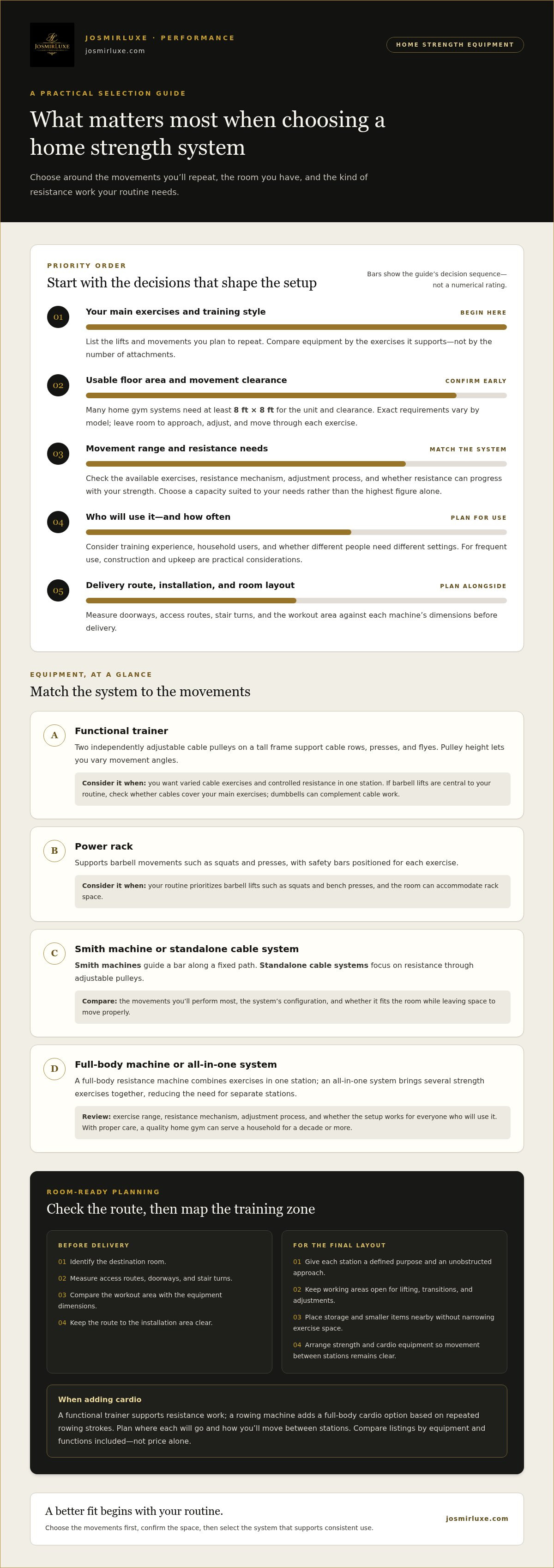
Start with the lifts you plan to repeat, your preferred training style, and the room’s usable floor area. Most home gym systems need at least 8 feet by 8 feet for the unit and clearance, though requirements vary by model.
Cable Systems and Functional Trainers
A functional trainer typically has two independently adjustable cable pulleys on a tall frame. This setup supports cable rows, presses, and flyes, with pulley height allowing you to vary movement angles. Choose one if you want a range of cable exercises and controlled resistance in a single station. If your routine centers on barbell lifts, consider whether cables alone cover your main exercises; dumbbells can complement cable work. Training at home also makes it easier to fit a session around your workday without traveling to a gym. For safety, review the operating instructions, secure each adjustment, and use suitable safeguards for your exercises. Keep the training area clear and set up the equipment as directed.
Comparing Strength System Types
Power racks support barbell lifts such as squats and presses, with safety bars positioned for each exercise. Functional trainers provide adjustable cable work, while Smith machines guide a bar along a fixed path. Standalone cable systems focus on resistance through adjustable pulleys. Compare the movements you’ll perform most, rather than counting attachments. A lifter prioritizing squats and bench presses, for example, may value rack space, while someone seeking varied standing exercises may prefer cables. Match the equipment to your goals, then confirm the configuration fits the room and leaves space to move properly.
Strength-training machines and all-in-one home gyms
Choose between focused resistance machines and broader systems by considering the exercises, resistance range, and cardio routines you want at home. Commercial-grade construction can matter for frequent use, but the equipment still needs to suit your training habits.
Full-Body Resistance Machines
A full-body machine combines several resistance exercises in one station, helping you organize routines around major muscle groups. Compare the available movements with your existing program, then consider whether the resistance can progress as your strength develops. Choose a machine with capacity suited to your lifting needs, rather than selecting the highest figure alone.
All-in-One Home Gym Systems
An all-in-one system brings several strength exercises together, reducing the need for separate stations. Before choosing one, review its exercise range, resistance mechanism, and adjustment process. Consider whether several household members will use it and whether their routines require different settings. With proper care, a quality home gym can serve a household for a decade or more, so account for upkeep and whether the system will support consistent use.
Strength equipment and cardio machines serve different purposes. A functional trainer supports resistance work, while a luxury rowing machine adds a full-body cardio option based on repeated rowing strokes. If you’re considering a rowing machine alongside strength equipment, plan where each will go and how you’ll move between stations. Compare product listings by the equipment and functions included, not by price alone. Choose a machine that complements your regular routine and available space, rather than simply opting for the most elaborate setup.
Delivery, installation, and design assistance
Plan the room before equipment arrives. Measure the access route, doorways, stair turns, and workout area, then compare those measurements with each machine’s dimensions. A floor plan can help you place a strength station, rowing machine, and storage without blocking movement. Keep the route to the installation area clear and group equipment according to how you’ll use it.
For delivery and setup planning, make a checklist: identify the destination room, note access constraints, and decide where each piece will go. Separate equipment placement from design choices. Position a cable station, for example, so its working area stays open, then place smaller items nearby without narrowing the exercise space. This sequence helps fit the equipment into the room’s existing layout.
For a cohesive home-gym interior, choose finishes and colors that work with the surrounding space rather than treating fitness equipment as an afterthought. Compare equipment by design, footprint, and intended use, while keeping durability and easy access in mind. A rowing machine may fit along a longer wall, while a compact strength station can anchor a dedicated training zone. Mirrors or storage should support your workout without crowding the equipment.
Your design can account for accessories, too. Designer kettlebells may complement the room’s palette, but choose them for comfortable handling and the exercises you perform. Keep weights organized near their training area, leaving clear space for lifting, transitions, and adjustments. Before final placement, review the layout: each station should have a defined purpose, an unobstructed approach, and enough room for its intended movements.
JOSMIRLUXE: Luxury Treadmills
JosmirLuxe helps you explore premium home fitness options when you’re ready to shape a considered setup. Its home fitness selection includes functional trainers and strength equipment, smart home gym systems, premium rowing and cardio equipment, and luxury treadmills.
Choose equipment according to the training experience you want. A functional trainer supports varied cable exercises, while a smart home gym offers an integrated approach to strength work. Premium rowing and cardio equipment can complement a strength-focused space with dedicated conditioning options. JOSMIRLUXE offers all three categories, making it easier to compare options against your goals and room layout.
Shape a home gym around the way you want to train
A thoughtful home gym can become more than a place to exercise. It gives your training a dedicated setting that fits into daily life, rather than making a spare room feel temporarily filled with equipment. Shape the space around the habits you want to sustain: a clear focus, a considered layout, and equipment suited to the way you prefer to move.
As you refine your plan, think beyond the first purchase. Choose a setup that makes regular training accessible and can accommodate changing fitness priorities. The right high end home strength equipment is what fits both your goals and the home you want to create. Explore JOSMIRLUXE’s luxury fitness equipment to find options for your home gym.
Explore JosmirLuxe home gym options and take the next step toward a training space designed around you.
Frequently Asked Questions
Who can benefit from a home gym?
A home gym can suit people who prefer to train on their own schedule, households with different fitness routines, and experienced lifters seeking consistent access to equipment. It may also appeal to beginners who feel more comfortable learning movements privately. Someone balancing strength sessions with cardio, for example, can arrange a personal routine without commuting between facilities.
What counts as high-end home strength equipment?
High-end home strength equipment is generally distinguished by its training range, construction, adjustment options, and suitability for regular use. Assess how smoothly settings change, whether the exercise options fit your program, and how the machine fits your room. A well-chosen functional trainer, for example, may provide more useful variety than a more elaborate machine that doesn’t match your routine.
How much does high-end home gym strength equipment cost?
Cost depends on the type and number of machines, resistance system, included stations, and delivery or installation arrangements. A single strength machine and a multi-station setup are different purchasing decisions, so compare what each configuration includes. Consider whether accessories are included or sold separately, and prioritize functions you’ll use consistently.
How much space and ceiling height do home strength machines require?
Space needs depend on a machine’s dimensions and the movements performed around it. Measure the usable floor area, ceiling height, doorways, and access path before settling on a layout. A tall cable frame, for example, needs vertical clearance, while barbell exercises require room for lifting and positioning. Leave open space for safe entry, adjustments, and movement.
What electrical, flooring, and installation requirements should buyers consider?
Electrical needs vary by equipment. Motorized cardio machines and connected systems may require power, while many resistance machines do not. Match the room’s electrical setup to the product specifications. Consider floor stability, surface protection, and equipment weight, especially where loads are concentrated. Plan the delivery route and assembly area, and follow the manufacturer’s installation guidance for each machine.