

The option that looks more compact isn’t always the easier fit. In a functional trainer vs smart gym comparison, a functional trainer offers dual adjustable pulleys for versatile cable exercises, while a smart gym typically combines strength training in an integrated system. The right choice depends on how you train and how much space you can dedicate to equipment.
Both support strength training at home, but offer different experiences. A functional trainer lets you adjust cable height and position; a smart gym may appeal if you prefer a more integrated setup. Neither is automatically the better investment. Your goals, available floor space, installation requirements, and preferred training style all matter.
This guide compares the options in practical terms, including cost considerations, without declaring one a universal winner. You’ll learn what to assess before choosing, how each setup works in everyday use, and which may suit your home and routine.
- Choose a cable-focused setup for flexible movement options, or an integrated system if guided, consolidated strength stations better suit your routine.
- Compare usable workout clearance, not just the machine’s footprint; pulley movement needs open space in front.
- Before selecting a setup, account for ceiling height, access to each station, and the route equipment must take into your home.
- Use your training priorities to narrow the options, then explore JosmirLuxe’s functional trainers and strength equipment or smart home gym systems.
Choosing equipment based on goals, space, budget, and training style
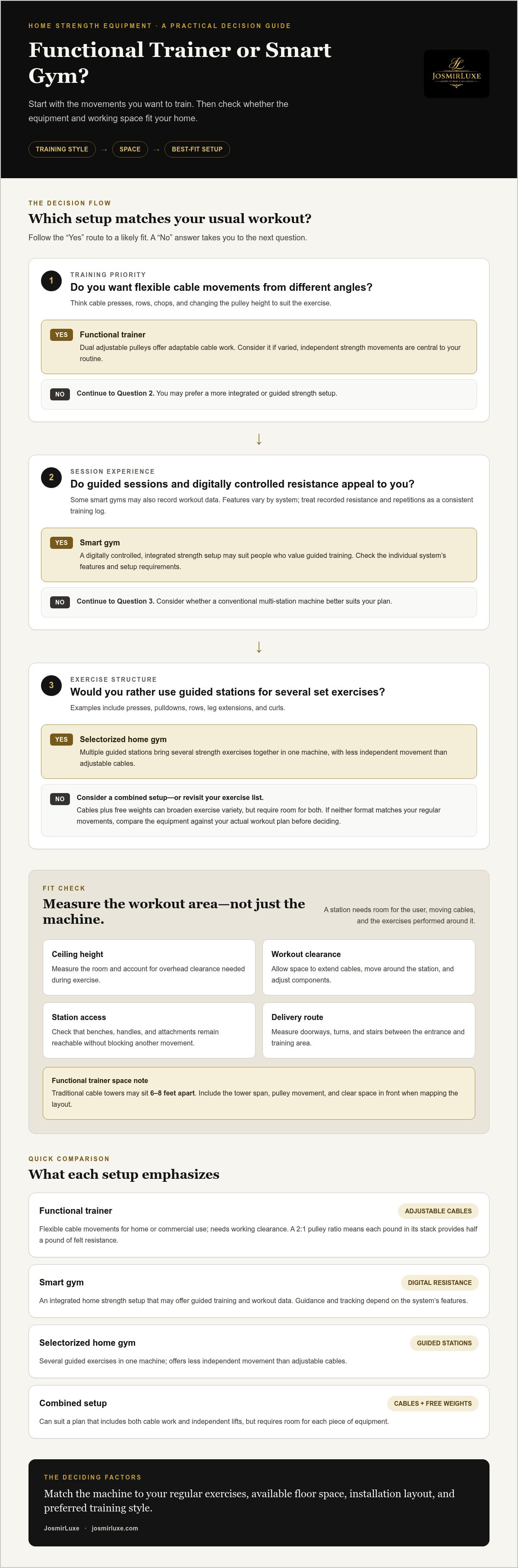
Choose by matching your usual movements to the machine’s resistance and setup. A functional trainer’s 2:1 pulley ratio means each pound in its stack provides half a pound of felt resistance.
Functional Trainers
A functional trainer uses dual adjustable pulleys, so you can change cable height for movements such as presses, rows, and chops. Its versatility suits home users who value independent, varied strength work, and commercial settings where multiple users need adaptable stations. The trade-off is a larger working area: traditional towers may sit 6-8 feet apart. Pair cables with dumbbells or a barbell for free-weight lifts; a trainer may not suit someone seeking guided, fixed-path exercises or a compact all-in-one machine.
Smart Gyms
A smart gym combines strength exercises with digitally controlled resistance and may record workout data. Features vary, so treat recorded repetitions and resistance as a consistent training log, not an independent measure of performance. Follow the machine’s setup and operating instructions, keep clear of moving parts, and stop if resistance behaves unexpectedly. This format may suit people who prefer guided sessions and an integrated setup, but not lifters who want conventional weights or a broad choice of attachments.
| Option | Training style | Space and setting | Main trade-off |
|---|---|---|---|
| Functional trainer | Adjustable cable movements | Home or commercial use; needs working clearance | Flexible, but not a fixed-path station |
| Smart gym | Digitally controlled resistance | Integrated home strength setup | Guidance and tracking depend on system features |
| Combined setup | Cables plus free weights | Requires room for both | Broader variety, more equipment to accommodate |
| Selectorized home gym | Guided stations and weight stack | Multiple exercises in one machine | Less independent movement than adjustable cables |
For a home gym, list your regular exercises and map the available training area before choosing. For a commercial floor, prioritize adaptable stations and user access. Choose cables for adjustable movement, guided equipment for structured sessions, or combine cables and free weights if both suit your routine.
Footprint and installation requirements
Measure the entire exercise area, not just the machine’s footprint. A strength station needs space for the user, moving cables, and the exercises performed beside or in front of it.
Functional trainers can have a narrower footprint than some home gyms, yet still need clear working space. Traditional cable towers may sit 6-8 feet or more apart. Include that span, pulley movement, and room to perform a full range of exercises in your floor plan.
Smart gym designs vary, so assess the required installation layout instead of assuming every system saves space. An integrated machine may combine several stations, while a wall-mounted design also needs a suitable mounting surface and the specified hardware. Follow the installation instructions.
Before choosing either setup, assess these four points:
- Ceiling height: Measure the room where the equipment will stand, including any overhead clearance needed during exercise.
- Workout clearance: Mark the space needed to extend cables, move around the station, and access adjustable components.
- Station access: Check that benches, handles, and other attachments can be reached without blocking another movement.
- Delivery route: Measure doorways, turns, and stairs between the entrance and the final training area.
For a wall-mounted unit, account for the wall and installation method before placing other equipment. For a freestanding functional trainer, map both towers and the open area between and in front of them. This helps ensure the machine fits in practice, not just on paper, without restricting your movements.
Recommended functional trainers and home gyms
Start with your regular workout, not a machine’s feature list. For a home gym focused on cable movements, choose a functional trainer; for several guided strength stations, consider an integrated home gym. Neither format automatically builds more muscle. Programming and progressive overload matter more than the machine category.
Match the setup to these practical use cases:
- Choose adjustable pulleys if your routine includes cable presses, rows, and movements from different angles. Their flexibility suits users who want varied cable exercises within one station.
- Choose a multi-station home gym if you prefer guided exercises such as presses, pulldowns, rows, leg extensions, and curls. This format organizes several strength movements around one machine.
- Combine cables and free weights if your plan includes both cable work and independent lifts. This adds exercise variety, but requires space for each piece of equipment.
- Build in instruction for beginners if adjustable pulleys are new to you. Learning cable height, attachment changes, and controlled movement helps make early workouts more deliberate.
Before deciding, list the exercises you expect to do each week and compare them with each machine’s stations and movement options. A functional trainer may be less suitable if you want only fixed-path exercises; a guided home gym may disappoint if you want versatile cables and independent movement.
Durability depends more on machine quality and manufacturer support than on whether you choose a trainer or a home gym. Both need routine inspection and proper maintenance. Choose equipment that supports your actual workout plan, fits your available space, and can be maintained consistently.
JosmirLuxe: Luxury Treadmills
JosmirLuxe offers functional trainers and strength equipment alongside smart home gym systems, so you can explore both approaches to home strength training. If your routine also includes cardio, luxury treadmills and premium rowing and cardio equipment can complement a dedicated strength setup.
Use your preferred exercises, available space, and training style to narrow down the category. Then explore equipment suited to the role you want it to play in your home gym, whether that’s adjustable cable work, an integrated strength system, or a separate cardio station.
As you shape your training space around your routine, explore JosmirLuxe’s home fitness equipment for options to consider.
Shape a Training Space You’ll Use
The functional trainer vs smart gym decision is clearer when you picture an ordinary training week, not an idealized one. Consider which sessions you’ll repeat, how equipment will fit alongside the room’s other uses, and whether the setup encourages you to return consistently. A well-chosen machine should support your intended habits without making your home feel crowded.
Before settling on a configuration, define the role strength equipment should play in your wider wellness routine. This keeps the decision focused on how you want to use your home, rather than on features that look compelling in isolation. A considered setup can adapt to your priorities while staying grounded in how you prefer to train.
As you shape a training space around your routine, explore JosmirLuxe’s home fitness equipment to consider options that suit your goals.
Frequently Asked Questions
What Is a Functional Trainer?
A functional trainer is a strength machine with two adjustable cable pulleys that provide resistance. Independent cables let you work one side at a time, such as with a single-arm press, or coordinate both sides for movements like a cable fly. It suits programs with varied cable exercises where you want to change the line of pull between movements.
Which Should You Choose?
Choose a functional trainer for hands-on cable work, or a smart gym if digitally controlled resistance and recorded workout data suit your routine. Think about what you’ll use consistently: people who enjoy setting pulley positions may prefer cables, while those who value a structured digital experience may lean toward a smart system. Compare the exercises you plan to do, not just the equipment’s features.
Who Should Not Buy Each Option?
A functional trainer may be a poor match if you want only guided, fixed-path exercises or dislike adjusting cables between movements. A smart gym may not suit you if you prefer conventional free weights or don’t want a digital interface involved in training. If either setup conflicts with your routine, consider another strength-training format instead of buying features you won’t use.
What is a functional trainer and how does it work?
A functional trainer provides resistance through cables running across adjustable pulleys, so you can position the handles for different exercise paths. For example, set one pulley low for a pulling movement or higher for a press variation. Because the cable allows movement through a chosen range, use controlled technique and a manageable load as you learn each exercise.
What are the safety risks and limitations of functional trainers and smart gyms?
Use smart gyms according to their setup and operating instructions, keep clear of moving parts, and stop if resistance behaves unexpectedly. Functional trainers need open workout space and may not suit people seeking guided, fixed-path exercises or a compact all-in-one machine.