

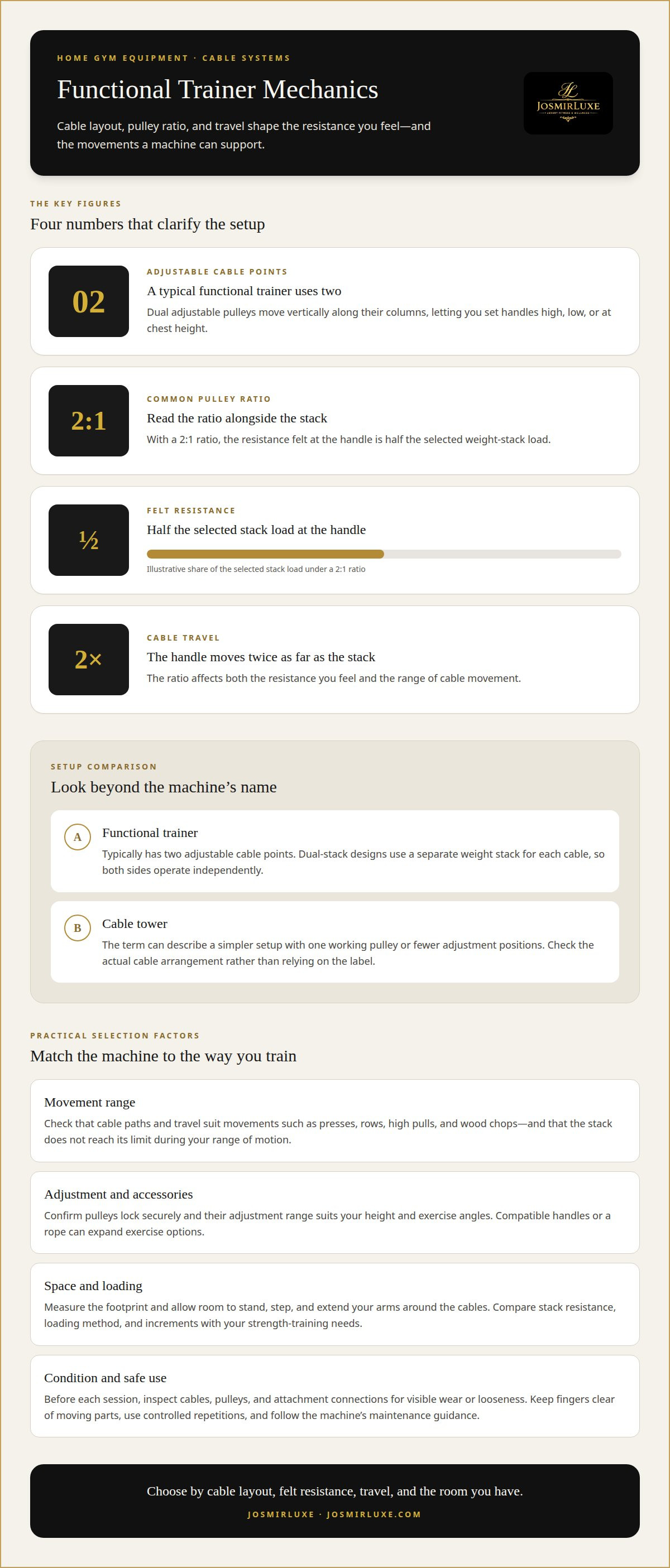
A functional trainer and a cable tower can look similar, but their cable layouts shape how each fits a home gym. A functional trainer for a home gym typically has two adjustable cable points, while “cable tower” can describe a more limited single-cable setup. Most functional trainers use a 2:1 pulley ratio, so the resistance felt is half the weight shown on the stack.
It’s understandable to focus on a machine’s footprint and listed weight, but neither tells the whole story. Adjustability, pulley ratio, and the movements you plan to do matter too. This guide explains how functional trainer setups differ, what to compare, and how to choose one for your space and training priorities.
Key Takeaways
- Compare cable layouts and pulley adjustment to understand which setup better suits your preferred exercises.
- Assess the factors that shape a trainer’s cost before weighing models against your budget.
- Match a machine’s footprint, versatility, and resistance setup to your available space and training priorities.
- Explore JosmirLuxe’s functional trainers and strength equipment when you’re ready to shape a considered home gym.
What’s the difference between a functional trainer and a cable tower?
A functional trainer for a home gym typically has two adjustable cable points, while a cable tower may offer a simpler layout. Compare pulley movement, resistance, and cable travel before choosing.
Dual-Stack and Adjustable-Pulley Designs
Dual-stack machines have a separate weight stack for each cable, so both sides operate independently. In a dual adjustable pulley system, each pulley moves vertically along its column, letting you position the handles high, low, or at chest height. A cable tower may have one working pulley or fewer positions, so assess the actual layout rather than relying on the name.
Pulley Ratios and Felt Resistance
A 2:1 pulley ratio means you lift half the selected weight stack’s load at the handle. The trade-off is cable travel: the handle moves twice as far as the stack. Compare the ratio alongside stack weight to understand usable resistance and range of movement.
Pulley Adjustment and Accessories
Adjustable pulleys let you set cable height for movements such as low rows, chest presses, and high pulls. Check that each pulley locks securely and that its adjustment range suits your height and chosen exercises. Compatible attachments, such as handles or a rope, can expand your options. Unlike a Smith machine or power rack, cable machines rely on moving pulleys.
Cable Travel, Safety, and Maintenance
Check that the cable travel allows your full range of movement without the weight stack reaching its limit. Before each session, inspect cables, pulleys, and attachment connections for visible wear or looseness. Keep your fingers clear of moving pulleys and the weight stack, and use smooth, controlled repetitions. Follow the machine’s maintenance guidance to keep cables and moving parts in working order.
Functional trainer product prices
Price comparisons are most useful when you consider each model’s features and footprint together. For a home gym, match the trainer’s capabilities to your exercises before weighing a compact design against a larger setup.
Listed Product Prices
Compare each listed price with what the product includes, such as its pulley arrangement, weight stacks, and attachments. For example, a trainer supplied with several handles may support more exercise variety than a basic configuration. Distinguish listed features from optional accessories, then compare models on the same basis. This makes the price easier to interpret without treating every trainer as equivalent.
Comparing Model Prices
Compare models by intended use, not by the word “commercial” in a description alone. A compact trainer may suit a limited footprint, while a larger unit may offer a different setup for multiple users. Note each design’s footprint, available resistance, and supported exercises. A model with broader capabilities may be a worthwhile upgrade if it serves more of your planned workouts.
Prices and Product Specifications
Build your comparison around the specifications that affect training: stack configuration, pulley positions, cable travel, and included accessories. For example, someone prioritizing upper-body cable exercises may value adjustable pulley positions more than extra attachments. Consider whether the resistance suits your current strength work and whether the machine supports exercises for each major muscle group. A clear feature comparison separates useful capabilities from equipment you’re unlikely to use.
Functional trainer models and product selection
Choose a model by matching its features to the workouts you plan to do. A strength-focused routine, for example, may need different loading options from sessions built around mobility and cable accessories. Start with your fitness goals, then list the movements the machine must support. This keeps an impressive feature set from overshadowing practical use.
Next, compare how each trainer fits your room and training style. Measure the available footprint, including space to stand, step, and extend your arms around the cables. A compact frame may suit a multipurpose room, while a larger setup may work better in a dedicated home gym. Consider whether the stacks meet your resistance needs or whether a plate-loaded design suits equipment you already use.
- Movement range: Check that cable paths suit exercises such as presses, rows, and wood chops.
- Adjustability: Match adjustable pulley positions to your height and preferred exercise angles.
- Loading: Compare the resistance increments and loading method against your current strength training.
- Room layout: Include clearance for the frame, your stance, and safe movement around the machine.
Finally, consider how each feature serves your routine. If you plan to do single-arm pulls, check whether the cable arrangement allows a stable stance and full reach. If several people will use the machine, prioritize adjustments that make transitions straightforward. A functional trainer for a home gym should support exercises you’ll use consistently, not just offer a long feature list. This practical comparison helps you narrow down equipment that fits your fitness priorities, space, and loading preferences.
JosmirLuxe: Functional Trainers and Strength Equipment
JOSMIRLUXE offers functional trainers and strength equipment for homeowners creating a dedicated training space. If you’ve narrowed your choice to cable-based strength work, let your planned exercises, available room, and preferred loading style guide your decision. A trainer should complement your routine, not add features that don’t serve it.
For a broader home fitness setup, JOSMIRLUXE also offers smart home gym systems, luxury treadmills, and premium rowing and cardio equipment. These categories can help you plan strength and conditioning equipment around the way you intend to train.
To discuss your home gym equipment needs, contact JOSMIRLUXE.
Shape a Training Space You’ll Return To
Let your training habits guide your final choice. A functional trainer for a home gym should fit practically into your space, with room for the routines you value now and flexibility as they change. Consider how it will sit alongside your other home fitness equipment and whether the setup makes you want to begin a session.
Before deciding, picture a typical workout in the room: where you’ll stand, how you’ll move, and what else needs to fit nearby. This mental walkthrough can clarify your priorities and help you choose intentionally, rather than focusing on features alone.
When you’re ready to explore your next step, discover fitness equipment at JosmirLuxe and move toward a home gym designed around the way you train.
Frequently Asked Questions
Are functional trainers good for home gyms?
A functional trainer is a strong fit when cable work is a regular part of your training. It can serve as a dedicated station for strength sessions, warm-ups, or accessory work after another workout. If your routine relies mainly on barbell lifts, consider it as a complement rather than expecting one machine to cover every training style.
Can you build muscle with a functional trainer?
Yes. To make cable training progressive, record the resistance setting and repetitions for each exercise, then aim to improve over time while maintaining controlled movement. For example, track a row and a press separately instead of relying on memory. Adjustable resistance makes a trainer useful for planning a varied strength routine.
How do I choose the right functional trainer or cable machine for my space?
Beyond measuring the final setup area, consider how the equipment will reach its destination. Measure narrow doorways, hallways, stair turns, and ceiling height along the route. A machine that fits the planned room may still be difficult to move through your home. Include its assembled dimensions and any delivery-path constraints in your decision.
What pulley ratio should I look for?
There’s no single ratio that suits every training plan. First identify the lightest and heaviest cable exercises you expect to do, then consider whether the machine’s loading options can accommodate both. Treat the ratio as one factor, not a standalone measure of suitability. Let your intended movements and progression needs guide your choice.
Which cable attachments do I need to start, and will they work across machines?
Start with attachments that cover the movements in your plan, and add others only when a specific exercise calls for them. For instance, handles can work for presses, while a longer bar may suit a two-handed row. Don’t assume an attachment fits every machine; check that its connector matches the pulley connection before purchasing or using it.