

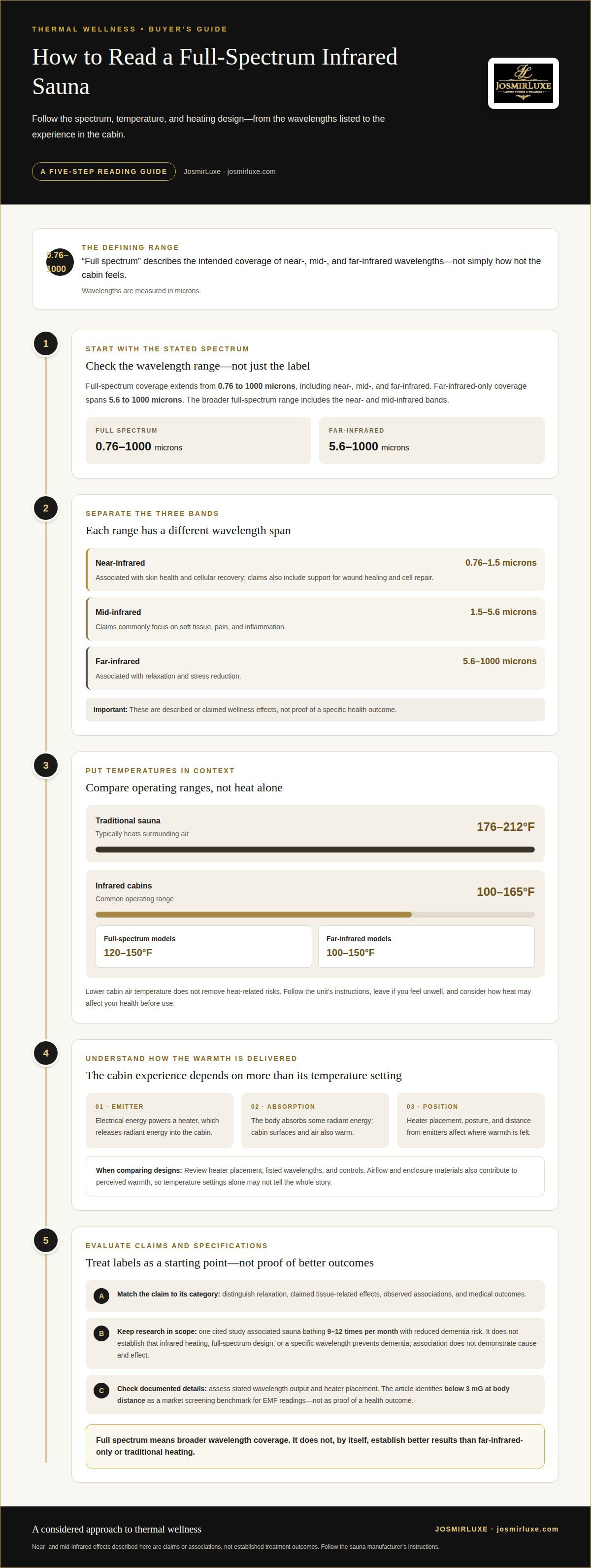
A full spectrum infrared sauna is defined by the range of light it uses, not simply by how hot the cabin feels. It combines near-, mid-, and far-infrared wavelengths across a range of 0.76 to 1000 microns, giving it a broader spectrum than a sauna that uses far-infrared heat alone.
It’s natural to focus on the warmth: you feel it in your body, but the heating mechanism differs from a traditional sauna, which warms the surrounding air. Infrared saunas use light to warm the body directly, and the wavelengths used are central to how a full spectrum infrared sauna is designed to work.
This guide explains what the different parts of the spectrum mean, how infrared heat is produced, and what potential wellness benefits are associated with sauna use. It also covers practical differences to consider when deciding whether this type of thermal wellness suits your home.
Key Takeaways
- Distinguish near-, mid-, and far-infrared wavelengths to understand what “full spectrum” describes in a sauna.
- Separate potential wellness benefits from established outcomes, and consider the limits of claims about specific wavelengths.
- Learn how infrared energy warms the body differently from a traditional sauna’s heated air.
- Use the heating approach, intended experience, and space available to guide your thermal wellness choices.
What is a full spectrum infrared sauna?
The label describes a sauna designed to use near-, mid-, and far-infrared wavelengths. That is a broader range than far-infrared-only models use.
Near-, Mid-, and Far-Infrared Bands
Near-infrared spans 0.76 to 1.5 microns; mid-infrared spans 1.5 to 5.6 microns; far-infrared spans 5.6 to 1000 microns. Near-infrared is associated with skin health and cellular recovery, while mid-infrared claims commonly concern soft tissue, pain, and inflammation. Far-infrared is associated with relaxation and stress reduction. These are claimed effects, not proof of a specific health outcome. For a buyer, a model described as full spectrum combines all three bands.
Far-Infrared and Full-Spectrum Ranges
Far-infrared spans 5.6 to 1000 microns, while full-spectrum coverage extends from 0.76 to 1000 microns. The broader range includes near- and mid-infrared wavelengths. Traditional saunas heat the surrounding air and typically reach 176 to 212°F, unlike infrared models, which warm the body directly. In the United States, the price depends on the cabin, heater design, and materials. Compare specifications and documented EMF readings; a market screening benchmark is below 3 mG at body distance. Assess the heater’s stated wavelength output, not its label alone.
Sauna Temperature Ranges
Infrared cabins commonly operate between 100 and 165°F. Full-spectrum models typically run from 120°F to 150°F, while far-infrared models are listed at 100 to 150°F. These ranges differ from traditional sauna temperatures, but lower air temperature doesn’t remove heat-related risks. Follow the unit’s instructions, leave if you feel unwell, and consider how heat may affect your health before use.
Near-infrared light reaches the skin’s surface and is described as supporting wound healing and cell repair. The National Library of Medicine notes that only far-infrared transfers energy purely as heat perceived as radiant heat.
Potential benefits of full-spectrum infrared saunas
Potential benefits are generally described in terms of comfort and recovery, not treatment for a diagnosed condition. Near-infrared use is associated with skin health and cellular recovery, with claims also including support for wound healing and cell repair. These are possible wellness effects, not established treatment outcomes.
Claims about mid-infrared focus on soft tissue, pain relief, and reduced inflammation, while far-infrared use is associated with relaxation and stress reduction. These claims point to different reasons someone might consider a sauna session. A calming routine, for example, may prioritize relaxation, while recovery-focused marketing often highlights tissue-related claims. Identify the stated goal to assess product descriptions more carefully.
Research on sauna bathing has also examined outcomes beyond immediate comfort. One cited study associated sauna bathing nine to 12 times per month with a reduced risk of dementia. That association concerns sauna bathing generally. It doesn’t establish that infrared heating, a full-spectrum design, or a particular wavelength prevents dementia. An association alone doesn’t demonstrate cause and effect.
Consider the strength and relevance of each claim before making it a deciding factor. Combining near-, mid-, and far-infrared wavelengths broadens the range of wellness effects described for these saunas, but does not establish better outcomes than far-infrared-only or traditional heating. Check whether a claim concerns relaxation, an observed association, or a medical outcome. Keeping these distinctions in mind helps put potential benefits in perspective when choosing a home wellness routine.
How Infrared Sauna Heating Works
Infrared heating starts at the emitter: electrical energy powers a heater, which releases radiant energy into the cabin. The body absorbs some of that energy, while surfaces and air in the enclosure also warm. This gives the session a different heating pattern from systems that rely primarily on circulating hot air.
Heater placement affects where you feel the warmth. A panel directed toward your back, for example, creates a different sensation from one positioned beside your legs. Your posture and distance from the emitters also affect exposure, so warmth can vary between seats or positions in the same cabin.
Controls let you adjust the cabin’s operating conditions, but the displayed temperature doesn’t capture the whole experience. Radiant energy, airflow, enclosure materials, and heater placement all contribute to perceived warmth. Comparing temperature settings alone can therefore miss important differences between sauna designs.
“Full spectrum” describes the intended range of heater output, not a sequence of treatments or a guarantee of greater relief. When comparing saunas, look at heater placement, the wavelengths listed in the specifications, and whether the controls suit your preferred session. These details explain a design more clearly than a broad label alone.
JOSMIRLUXE: Luxury Treadmills
JOSMIRLUXE offers premium home saunas for readers considering infrared heat for a dedicated home wellness space. After comparing wavelength coverage, temperature ranges, and potential benefits, focus on the experience you want and how a sauna might complement your routine. A sauna supports thermal wellness; it doesn’t replace exercise or establish a medical benefit.
For a closer look at this category, explore JOSMIRLUXE’s premium home saunas. If you’d like to discuss your home wellness plans, contact JOSMIRLUXE.
Shape a Wellness Space That Fits Your Routine
Choosing an infrared sauna is one part of shaping a home wellness space around your priorities. Consider where it would fit and how thermal wellness could complement your existing routines. These practical questions can help you decide whether this type of sauna suits your space and lifestyle.
Let everyday usability guide your next step. Explore JosmirLuxe’s thermal wellness offerings as you plan, or contact JosmirLuxe with questions about your home wellness plans. A thoughtful setup can help make your wellness space feel personal and inviting.
Frequently Asked Questions
What’s the Difference Between Near-Infrared, Mid-infrared, and Far-Infrared?
The bands differ in wavelength and in the effects commonly associated with them. Near-infrared is linked to skin and cellular-recovery claims, mid-infrared to soft-tissue and pain-relief claims, and far-infrared to radiant warmth and relaxation. These descriptions can help you interpret product language, but they don’t establish that a particular wavelength will produce a specific health outcome.
What is a full spectrum infrared sauna, and how does it work?
A full spectrum infrared sauna uses heaters designed to emit near-, mid-, and far-infrared wavelengths. The body absorbs infrared energy, while the cabin air also warms during use. When comparing models, look for details about the wavelengths the heater emits rather than relying only on “full spectrum” wording. This gives you a clearer picture of what the sauna is designed to provide.
What are the near-, mid-, and far-infrared wavelength ranges?
Near-infrared spans 0.76 to 1.5 microns; mid-infrared spans 1.5 to 5.6 microns; and far-infrared spans 5.6 to 1000 microns. Nanometer specifications express wavelength using a different unit, so check how each product labels its wavelength range. Check the units carefully when comparing product descriptions.
What are the evidence-based health benefits of full spectrum infrared saunas?
Claims include relaxation and support for recovery, but the available facts don’t establish that full-spectrum sauna use treats or prevents disease. A cited study associated sauna bathing nine to 12 times per month with reduced dementia risk; that association does not prove cause and effect or establish a benefit specific to infrared wavelengths. Treat medical claims with care.
What temperature and session length are recommended for infrared sauna use?
A stated ideal temperature range is 110-130°F. Begin with 10- to 15-minute sessions and build gradually toward 30- to 60-minute sessions, following the sauna’s instructions and your comfort. Temperature alone doesn’t determine how a session feels, so avoid pushing through discomfort. If a health condition or medication affects heat tolerance, discuss sauna use with a healthcare professional.