

Compression may ease the feeling of swelling and post-exercise soreness associated with shin splints, but it will not correct what is causing the pain. Compression therapy for athletes can be one part of recovery, while appropriate injury rehabilitation remains essential. Pressure should feel supportive, never painful.
If your lower legs feel heavy or puffy after training, you may wonder whether compression can help and what a session feels like. This guide explains what compression may and may not do for shin splints, how it relates to swelling and fluid movement, and what to expect. It also shows how compression can fit into a broader recovery routine, helping you decide whether it suits your training needs.
Key Takeaways
- Compression may ease some post-training soreness, but shin splints still call for attention to their underlying cause and appropriate rehabilitation.
- Learn how gentle, sequential pressure may support circulation and fluid movement when your legs feel swollen after exercise.
- A session with compression boots typically feels like a rhythmic squeeze and release; discomfort is a cue that the pressure may be too high.
- See how compression can fit into a broader recovery routine without replacing strength work, mobility, sleep, or professional injury care.
What Does a Compression Therapy Session Feel Like?
Delayed-onset muscle soreness commonly appears 24 to 48 hours after strenuous exercise. Compression can feel like steady, rhythmic pressure, but recovery depends on more than one method.
Garments and Boots Compared
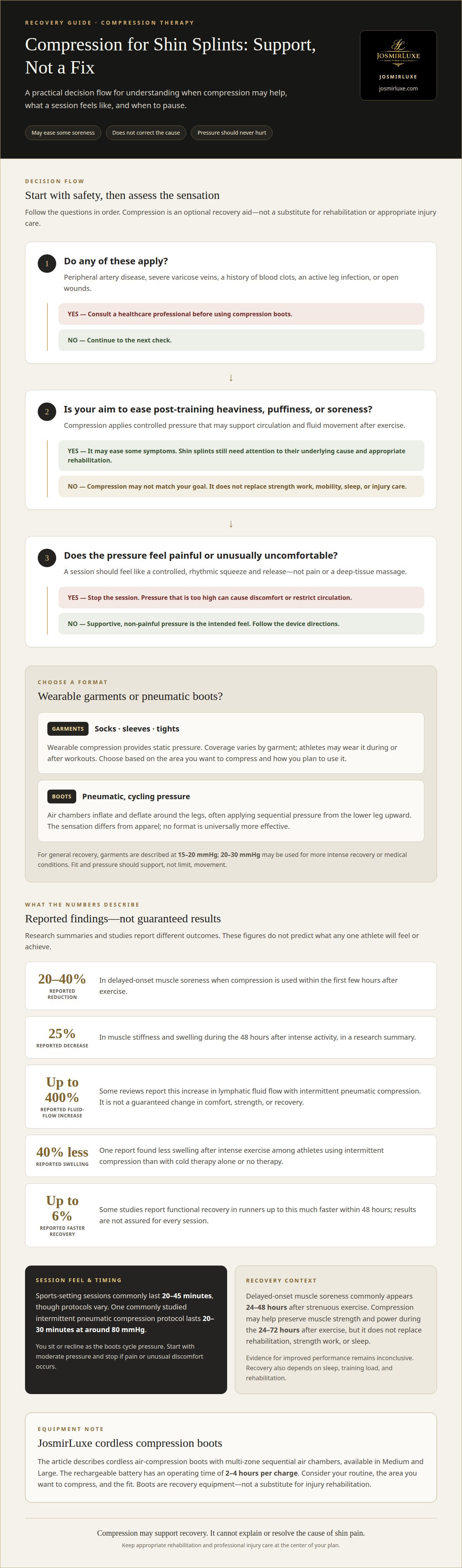
Socks, sleeves, and tights provide wearable compression, while pneumatic boots inflate and deflate around the legs. Coverage and pressure differ, so choose according to the area you want to compress and how you’ll use it. In the United States, cost depends on garment type, coverage, and whether you’re buying apparel or a recovery device. No format is universally more effective: some athletes report less soreness and fatigue, but evidence for improved performance remains inconclusive. Compression within the first few hours after exercise may reduce delayed-onset muscle soreness by 20% to 40%.
Compression Pressure for Athletic Recovery
For general recovery, compression garments are described at 15-20 mmHg; 20-30 mmHg may be used for more intense recovery or medical conditions. The distinction matters because pressure that’s too high can cause discomfort or restrict circulation. A snug fit should support, not limit, movement.
Compression therapy for athletes may help preserve muscle strength and power during the 24-72 hours after exercise, though it doesn’t replace proper rehabilitation, strength work, or sleep. People with peripheral artery disease, severe varicose veins, a history of blood clots, active leg infections, or open wounds should consult a healthcare professional before using compression boots. Stop if pressure becomes painful or causes discomfort.
Swelling and lymphatic drainage
Compression therapy uses controlled pressure, usually on the legs or arms, to support circulation and fluid movement. Athletes use compression garments, sleeves, and pneumatic boots that inflate and deflate around the limbs.
Swelling After Exercise, Injury, or Travel
After intense exercise, fluid may collect around worked muscles, contributing to swelling, stiffness, and fatigue. Compression garments or devices apply pressure to the affected area; a research summary reports a 25% decrease in muscle stiffness and swelling during the 48 hours after intense activity with compression therapy. For travel, socks or sleeves may help limit blood pooling during long flights or extended sitting. Swelling after an injury can have different causes, so compression doesn’t replace appropriate rehabilitation.
Circulation and Inflammation
Graduated pressure gently squeezes the limb, while sequential pressure from pneumatic boots encourages fluid movement and circulation. This may help manage post-exercise swelling, but reducing swelling isn’t the same as resolving its cause or treating inflammation. Some reviews report that intermittent pneumatic compression can increase lymphatic fluid flow by as much as 400%; that figure describes reported fluid flow, not a guaranteed change in comfort, strength, or recovery for every athlete.
Athletic Compression Methods
Garments include socks, sleeves, and tights; pneumatic boots use air pressure to compress and massage the legs. The consistent, cycling pressure of boots differs from static apparel, which athletes may wear during or after workouts. One report found 40% less swelling after intense exercise among athletes using intermittent compression than among those using cold therapy alone or no therapy. These methods support recovery, but neither replaces proper injury care.
Compression therapy session experience
A recovery-boot session feels like pressure building around the legs, then easing in cycles. The boots inflate and deflate, creating a firm squeeze that should not feel painful. In sports settings, sessions commonly last 20 to 45 minutes, though protocols vary. The practical takeaway: expect rhythmic compression, not a deep-tissue massage.
During a typical session, you sit or recline while the boots cover your legs. Air chambers apply sequential pressure, often moving from the lower leg upward. That pattern is intended to encourage circulation and fluid movement. A commonly studied intermittent pneumatic compression protocol lasts 20 to 30 minutes at around 80 mmHg. The sensation may feel unfamiliar at first, but excessive pressure can cause discomfort.
After an intense workout, athletes may use compression as one part of recovery. Some studies report functional recovery in runners up to 6% faster within 48 hours. Compression may also help preserve muscle strength and power during the 24-72 hours after exercise. These findings don’t mean every session makes recovery faster; sleep, training load, and rehabilitation still matter.
Unlike active recovery, compression leaves your muscles mostly at rest while the device cycles. Some athletes describe the sensation as a gentle mechanical massage. The proposed benefit relates to circulation and muscle recovery, not a direct increase in oxygen to tissues. Start with moderate pressure and duration, follow the manufacturer’s directions, and stop if you feel pain or unusual discomfort. A useful session feels controlled and fits around training without replacing movement or appropriate injury care.
JosmirLuxe: Red-Light Therapy Devices
JOSMIRLUXE offers cordless air compression therapy boots for athletes exploring recovery equipment for home use. The system uses multi-zone sequential air chambers and comes in Medium and Large sizes. It is a distinct option from compression garments and sleeves, and it should not be treated as a substitute for injury rehabilitation.
When choosing compression equipment, consider your routine, the area you want to compress, and the fit. JOSMIRLUXE’s cordless boots have a rechargeable battery with an operating time of two to four hours per charge. For questions about product specifications or fit, contact JOSMIRLUXE by phone, email, or live chat.
Shape a Recovery Routine That Fits Your Training
Make your next step a more intentional training and recovery setup. Compression therapy for athletes can be one consideration, alongside progressive exercise and appropriate care. If you’re exploring cordless compression boots for home recovery, contact JosmirLuxe to discuss the product.
JosmirLuxe brings together options for building that home environment, from luxury treadmills and functional trainers to smart home gym systems. Consider which kind of training you want to make consistent, how much room you can dedicate to it, and what would complement your existing routine. If you’re ready to explore a setup aligned with your goals, contact JosmirLuxe to learn more. A considered next step can help make your training space feel more purposeful.
Frequently Asked Questions
Can compression therapy help shin splints?
Compression may ease the feeling of lower-leg swelling or post-exercise soreness, but it does not address the cause of shin splints. If pain returns during every run, reducing discomfort with a sleeve is no substitute for adjusting training or addressing the injury. Persistent or worsening pain calls for appropriate clinical assessment and rehabilitation.
Are Compression Boots Dangerous?
Poorly fitting boots or excessive pressure can cause discomfort and may restrict circulation. If you have a history of blood clots, severe peripheral arterial disease, an active leg infection, or open wounds, consult a healthcare professional before use. Stop a session if the pressure becomes painful or your legs feel unusually uncomfortable.
Can I use compression before a workout?
Pneumatic compression before training may be part of a warm-up, but it does not replace dynamic movement. Before a run, for example, prepare with movements that actively engage your legs rather than relying on boots alone. Begin with moderate pressure and duration, and follow the device manufacturer’s directions.
Do Compression Devices Really Work?
Compression may support post-exercise recovery for some athletes, but evidence that it improves athletic performance remains inconclusive. To judge its role in your routine, track practical changes, such as how your legs feel after a demanding training day, while keeping your training, sleep, and rehabilitation consistent. Compression is not a substitute for injury care.
Do Recovery Wraps Actually Work?
Recovery wraps provide static compression and may help manage a feeling of swelling or blood pooling. Their usefulness depends on proper fit and the area being compressed. A sleeve, for example, can cover a specific lower-leg area, while a wrap can be adjusted around a targeted region. Neither should cause pain or replace injury rehabilitation.