

The most feature-packed device may be the one you use least. Choosing athletic recovery equipment can feel complex: compression boots and massage chairs offer different experiences, while long feature lists can obscure the practical questions of fit, space, and how you plan to use the equipment.
Start with your routine and home setup, not the number of settings on a product page. This guide compares recovery equipment by format, portability, fit, controls, and space requirements. You’ll find practical ways to compare a cordless leg compression system with a seated massage chair, so you can focus on features that affect everyday use. The aim isn’t to assemble the most elaborate setup, but to choose a tool that feels comfortable and fits your habits.
Key Takeaways
- Choose athletic recovery equipment around your routine and preferred format, rather than the length of a feature list.
- Compare compression boots and massage chairs by how you plan to use them and the space each format suits.
- Use practical specifications, such as battery life, available sizes, product dimensions, and listed modes, to make comparisons more meaningful.
- Before choosing, weigh fit, controls, portability, and room requirements against how you expect to use the equipment.
What Athletic Recovery Equipment Can, and Cannot, Do for Your Routine
Athletic recovery equipment includes tools used as part of a broader routine after exercise. Compression boots and massage chairs offer different ways to structure an at-home session, but neither replaces rest, thoughtful training practices, or the everyday habits that support recovery. Their practical value depends on whether the format fits your routine and feels comfortable to use.
Think of equipment as an option for shaping your recovery experience, not as a shortcut or a promise of improved performance. A device’s settings describe what it does mechanically; they don’t establish a particular health outcome. For broader context, the Sports Medicine Overview describes sports medicine as a field concerned with health in relation to exercise and sport, a wider scope than any single home device.
The practical distinction is simple: compression systems are worn on the legs, while massage chairs provide a seated experience. They suit different preferences, so one isn’t automatically a substitute for the other. Consider whether you’d rather use a focused boot-based format or settle into a chair, and whether that session fits naturally into your home routine. If you are leaning toward a seated wellness option, specialist retailers like Elite Massage Chairs offer a variety of models to help you gauge how different designs fit your space.
Compression Boots or Massage Chair: Start With Your Preferred Format
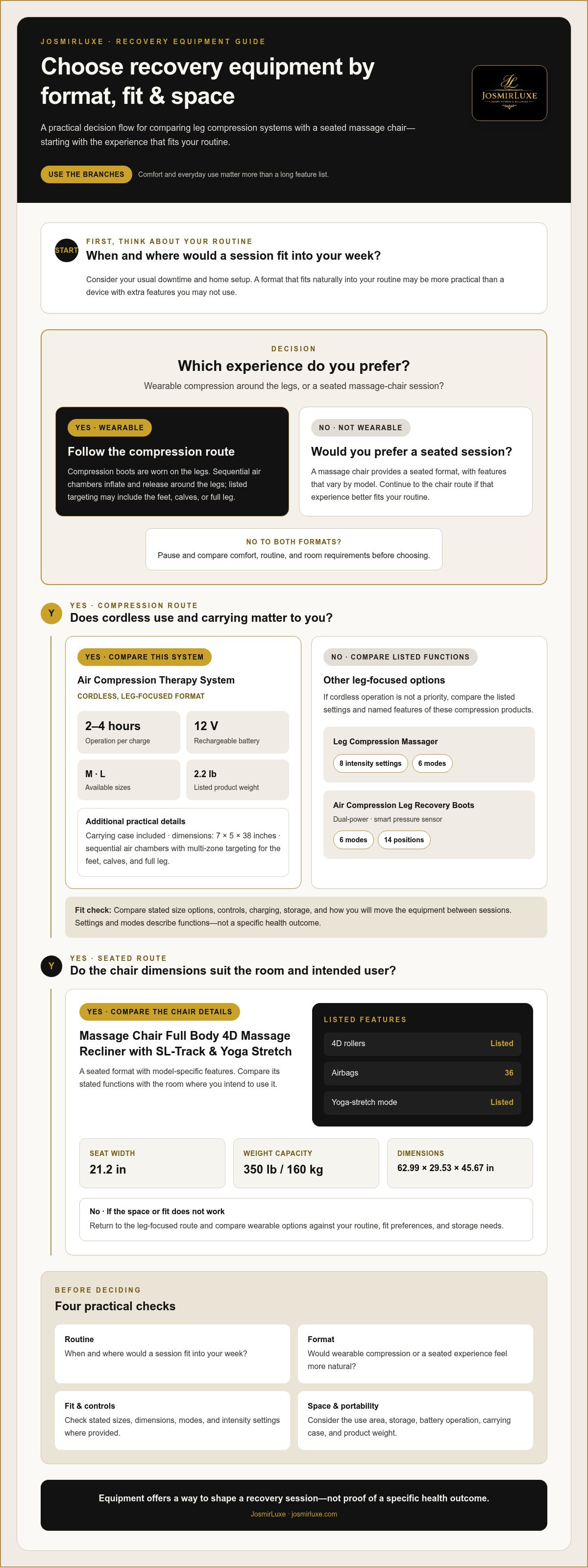
Sequential air compression boots inflate and release in sequence around the legs. A massage chair provides a seated format, with features that vary by model. The Massage Chair Full Body 4D Massage Recliner with SL-Track & Yoga Stretch lists 4D rollers, 36 airbags, and a yoga-stretch mode. Compare these features with the type of session you prefer, rather than treating a higher feature count as a measure of results.
Equipment describes a method of use, not proof of a specific health outcome. Choose based on comfort, routine, and the experience you want from a home recovery tool.
Choosing Athletic Recovery Gear: Four Comparison Criteria
Compare athletic recovery equipment in a consistent order: routine, format, fit and controls, then space and portability. This helps you focus on practical differences instead of features that may not change how you use the device.
- Routine: Decide when and where a session would fit into your week. A device that suits your usual downtime may be more practical than one that requires a new routine.
- Format: Consider whether you prefer wearable compression or a seated massage-chair experience. These offer different ways to use recovery equipment at home.
- Fit and controls: Compare stated size options and controls. Modes, intensity settings, and sequential compression describe different functions, so assess each only when product details specify it.
- Space and portability: Check where equipment will be used and stored. Battery operation, a carrying case, and product weight help you assess portability. A massage chair requires a different space plan, so compare its dimensions with the room where you intend to use it.
Match Product Details to Use, Fit, and Home Setup
The Air Compression Therapy System is cordless and uses a rechargeable 12 V battery, with 2-4 hours of operation per charge. It comes in sizes M and L, includes a carrying case, and uses sequential air chambers with multi-zone targeting for the feet, calves, and full leg. Its listed dimensions are 7 × 5 × 38 inches and its weight is 2.2 pounds. Use these details to think through sizing, charging, storage, and how you’ll move the equipment between sessions.
For a massage chair, compare the stated user-height range, seat width, weight capacity, and overall dimensions with the intended user and room. The Massage Chair Full Body 4D Massage Recliner with SL-Track & Yoga Stretch lists a 21.2-inch seat width, a 350-pound / 160-kilogram weight capacity, and dimensions of 62.99 × 29.53 × 45.67 inches. Specifications describe product features and fit, not a promised recovery, circulation, or pain-relief result. For a considered look at available options, explore recovery equipment.
Compare JosmirLuxe Recovery Equipment by Format and Listed Features
Product names and feature counts are most useful when they clarify how a device is used. The compression options below are leg-focused, while the massage chair provides a seated format. Compare the details with your preferred experience and home routine. The specifications describe equipment functions, not guaranteed recovery results.
| Format and product | Listed features | May suit preferences for |
|---|---|---|
| Air Compression Therapy System, compression boots | Cordless; rechargeable 12 V battery with 2-4 hours of operation per charge; sizes M and L; sequential air chambers; carrying case. | A wearable, leg-focused format and cordless operation. |
| Leg Compression Massager | 8 intensity settings and 6 modes. | Comparing listed settings and modes in a leg-focused device. |
| Air Compression Leg Recovery Boots with Dual-Power, Smart Pressure Sensor, 6 Modes, and 14 Positions | The product name lists dual-power, a smart pressure sensor, 6 modes, and 14 positions. | Reviewing a boot format with those named features. |
| Massage Chair Full Body 4D Massage Recliner with SL-Track & Yoga Stretch | 4D rollers, 36 airbags, and a yoga-stretch mode. | A seated massage-chair experience with the listed features. |
Shortlist Compression Systems and Massage Chairs
Use the table to narrow your choice by format, then compare details that matter to your routine. If cordless use is a priority, the Air Compression Therapy System’s stated battery operation, 2.2-pound weight, and included carrying case offer practical points to weigh. If you prefer a seated setup, compare the massage chair’s listed functions with its dimensions and the space available for use. For leg-focused options, distinguish named settings and modes without assuming they indicate a particular outcome.
The table helps distinguish leg-focused and seated formats. Explore the broader range of recovery equipment from JosmirLuxe.
Make Your Recovery Setup Work for You
Let your next step be deliberate, not elaborate. Identify a regular moment in your week when you’d genuinely welcome a recovery session, then consider which type of athletic recovery equipment fits that moment and your home. A tool that feels natural to use can be a more considered choice than adding several devices at once.
Think through the practical details before choosing: where the equipment will be used, how it will be stored, and whether its fit and controls suit your preferences. Start with the format that best matches your routine, then let your experience inform any future additions—whether expanding into broader home wellness innovations from companies like Pureffect or keeping things strictly minimal. The goal is a personal wellness space shaped around your habits, not a checklist of features.
Explore JosmirLuxe recovery equipment to compare options and choose a setup that feels right for your home and routine.
Frequently Asked Questions
Is athletic recovery equipment necessary for every athlete?
No. A training routine can be complete without dedicated recovery devices. Consider equipment if you have a clear use for it, such as adding a structured session to your usual post-training downtime, and if it suits your budget and home. If you’re unsure, first build a consistent routine around training, rest, and the habits you can maintain.
Can compression boots replace rest after a workout?
No. Compression boots aren’t a substitute for sleep, rest days, or a well-planned training schedule. Think of a device session as an optional addition, not a way to compensate for inadequate downtime. If you’re feeling unusually fatigued or dealing with persistent discomfort, don’t rely on equipment alone to address it.
How do I choose between compression boots and a massage chair?
Choose based on the experience you want to make part of your routine. Boots are worn on the legs, while a massage chair is used seated. Consider which format you’d actually choose after a typical training session, who will use the equipment, and whether it suits your household’s preferences and available space.
Are recovery devices suitable for people with medical conditions?
Not necessarily; suitability depends on the person and the device. If you have a circulation or heart condition, are pregnant, or have another health concern, consult a healthcare professional before using recovery equipment. Follow the product’s instructions for operation, settings, and session length, and stop if use causes discomfort.