

Compression isn’t the same as massage: air compression boots use inflatable sections to apply and release pressure around the legs in sequence. This creates a moving compression sensation that may support circulation, though experiences and potential benefits vary. The system’s design, fit, and pressure controls all affect how it feels in use.
It’s understandable to weigh potential recovery benefits against cost before choosing a system. This guide explains how the compression cycle works, what evidence suggests about circulation and recovery, and how product options differ. You’ll also learn which features affect price, making it easier to compare systems and decide what matters for your needs.
Key Takeaways
- Learn how sequential inflation and release create the distinctive compression cycle, and why fit and pressure control matter to the experience.
- Review what a trial involving 72 ultramarathon runners can and cannot tell you about post-exercise compression.
- Compare system options by the features that shape comfort and use, rather than relying on price alone.
- Understand the kinds of recovery goals these devices are commonly considered for, and where the evidence has limits.
Blood flow and circulation
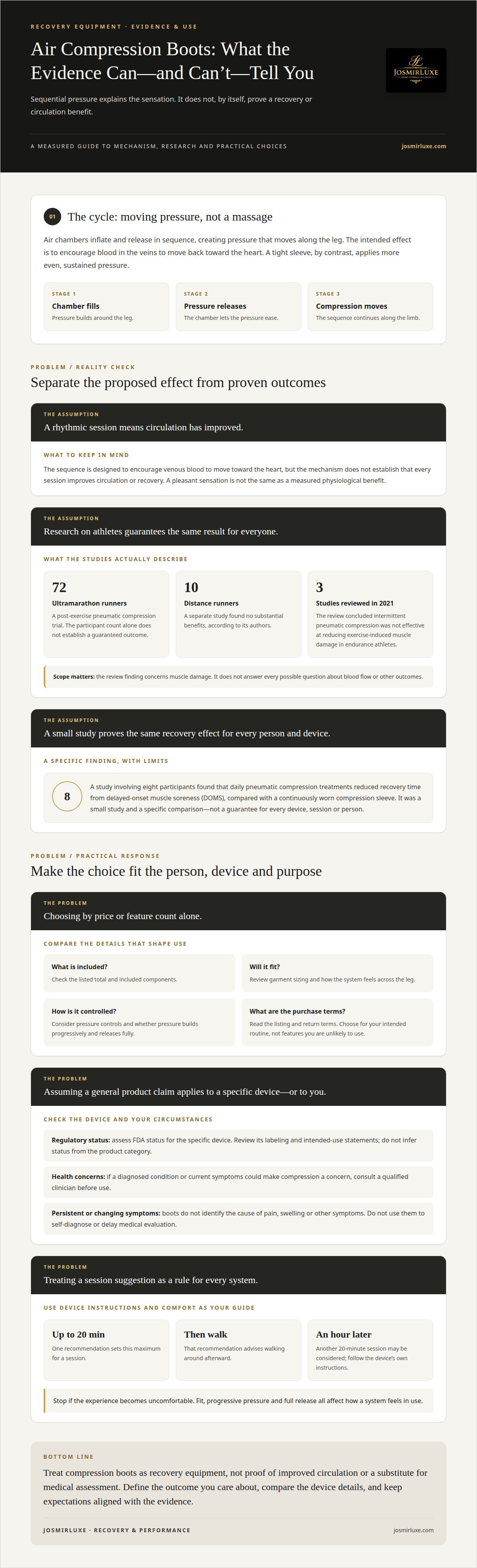
Air compression boots use inflatable chambers to apply pressure around the legs in sequence. As each chamber fills and releases, compression moves along the limb instead of remaining constant in one place. The intended effect is to encourage blood in the veins to move back toward the heart. This differs from wearing a tight sleeve, which applies more even, sustained pressure.
That mechanism explains why athletes often consider pneumatic compression after demanding exercise. It doesn’t establish that every session improves circulation or recovery. A clinical trial of post-exercise pneumatic compression therapy involved 72 ultramarathon runners, according to The study authors. The participant count describes the trial, not a guaranteed outcome for other athletes. A separate study involving 10 distance runners found no substantial benefits, according to The study authors.
The broader evidence also calls for measured expectations. A 2021 review of three studies concluded intermittent pneumatic compression was not effective at reducing exercise-induced muscle damage in endurance athletes, according to The review authors. That finding concerns muscle damage, not every possible effect on blood flow. It’s useful to separate the proposed circulation mechanism from demonstrated recovery outcomes.
To evaluate a device in practice, focus on how it works and how it feels. Notice whether the pressure builds progressively, releases fully, and remains comfortable across the leg. A rhythmic compression sensation doesn’t prove that circulation has improved. Treat these devices as recovery equipment, not a substitute for medical assessment if you have circulation concerns. A pleasant session and a measurable physiological benefit aren’t the same thing.
Compression boot prices and product options
There isn’t one price that applies to every system. Before deciding what represents value, compare the listed total, included components, garment sizing, controls, and return terms. Choose an option that suits your intended routine rather than paying for features you’re unlikely to use. Read the listing carefully to understand what the system includes and its purchase terms.
Assess FDA status for the specific device rather than inferring it from the product category. Review the labeling and intended-use statements, and distinguish precise regulatory language from broad promotional claims.
Suitability depends on both the person and the device’s instructions. If you have a diagnosed condition or current symptoms that could make compression a concern, consult a qualified clinician before use. Follow the manufacturer’s stated limits rather than treating a general description as personal medical guidance.
For session length, one recommendation sets a maximum of 20 minutes, followed by walking around; another 20-minute session may be considered an hour later. Follow the device’s own instructions and stop if the experience becomes uncomfortable.
Clinical research exists, but its relevance depends on who was studied, the compression protocol, and the outcome measured. When comparing claims, look for evidence related to your intended purpose, such as post-exercise comfort, rather than assuming findings about one outcome apply to every use.
Comparing these figures with the included components and terms can help clarify the listed value.
What conditions or symptoms are air compression boots used for?
People mainly use air compression boots as recovery equipment after demanding exercise. Common examples include heavy-feeling legs after a long run, post-workout soreness, or fatigue after extended training. The boots apply rhythmic pressure, but they don’t identify the cause of pain, swelling, or other symptoms. Their role is supportive, not diagnostic, and they don’t replace medical care.
Research on delayed-onset muscle soreness, or DOMS, offers one specific example. A study of daily pneumatic compression treatments involving eight participants found reduced recovery time from DOMS compared with a continuously worn compression sleeve. This finding comes from a small study and a specific comparison. It doesn’t establish that every device, session, or person will have the same result.
Define your goal by considering the symptom and its context. After a strenuous run, you might be looking for a recovery routine; after a day standing, you might notice temporary leg fatigue. These situations differ from persistent swelling, sudden pain, or symptoms affecting one leg. Don’t use compression equipment to self-diagnose these concerns or delay medical evaluation.
It also helps to distinguish a soothing sensation from a treatment effect. A session can feel relaxing without proving that soreness will resolve faster or circulation has changed. Track the practical outcome you care about, such as how comfortable you feel after training, and compare it across similar workouts. If symptoms persist or worsen, focus on finding their cause instead of relying on compression as the answer.
JOSMIRLUXE: Luxury Treadmills
JOSMIRLUXE offers Luxury Treadmills for readers creating a considered home training environment alongside recovery equipment. Compression supports a recovery routine, while a treadmill serves a different purpose by making walking or running part of regular exercise. For broader training needs, explore Functional Trainers and Strength Equipment, Smart Home Gym Systems, and Premium Rowing and Cardio Equipment.
Choose equipment according to its role in your routine: dedicated cardio, strength work, or a more integrated home gym. These options complement a recovery-focused setup rather than replacing compression boots or medical care for persistent symptoms. To explore fitness and wellness equipment, visit the JOSMIRLUXE online destination.
Shape a Recovery Routine That Fits Your Training
Make recovery equipment part of a broader routine instead of treating any single device as the whole plan. If you’re considering air compression boots, first define what you want your routine to support, then weigh comfort, fit, and how consistently you’ll use the system. Also consider your training space and the other equipment that could help you stay active at home.
The next step is to explore options that align with your goals and home setup. For a considered look at premium fitness and wellness equipment, explore JOSMIRLUXE's online destination. A thoughtful choice can help make your home environment feel more purposeful, personal, and ready for the routine you want to build.
Frequently Asked Questions
What are compression boots and how do they work?
Compression boots are wearable devices that apply pressure around the legs as part of a recovery routine. Some use powered air chambers, while others rely on a close-fitting garment. Coverage varies by design: a full-leg boot, for instance, covers more area than a sleeve designed to fit around the calf.
What are air compression boots and how do they work?
Air compression boots use a pump to inflate chambers around the legs in sequence. Before choosing a system, consider which areas it covers and whether the fit feels even. Positioning matters: a boot should sit comfortably without pinching or painful restriction, and its controls should be straightforward to use.
What benefits may air compression boots offer for recovery and circulation?
Some people use air compression boots for post-exercise comfort and the sensation of rhythmic pressure. The intended compression pattern may support blood movement through the legs, but that mechanism doesn’t prove consistent recovery benefits for every user. Consider these devices optional recovery equipment, not a treatment for circulation problems or a substitute for medical care.
How do pneumatic compression devices differ from compression socks and massage guns?
Pneumatic devices use air-filled chambers to apply pressure across the areas covered by their garments. Compression socks provide sustained pressure through fabric, while massage guns deliver localized percussive contact to selected muscles. These tools differ in coverage and sensation. A massage gun, for example, targets a specific muscle rather than enclosing the lower leg.
How much do these systems cost in the US, and are they covered by insurance?
Prices vary with system design, included components, controls, and fit options, so compare the complete package rather than focusing on one feature. Insurance coverage depends on the plan and reason for purchase. Ask your insurer whether the specific device and intended use qualify, and what documentation the plan requires.